
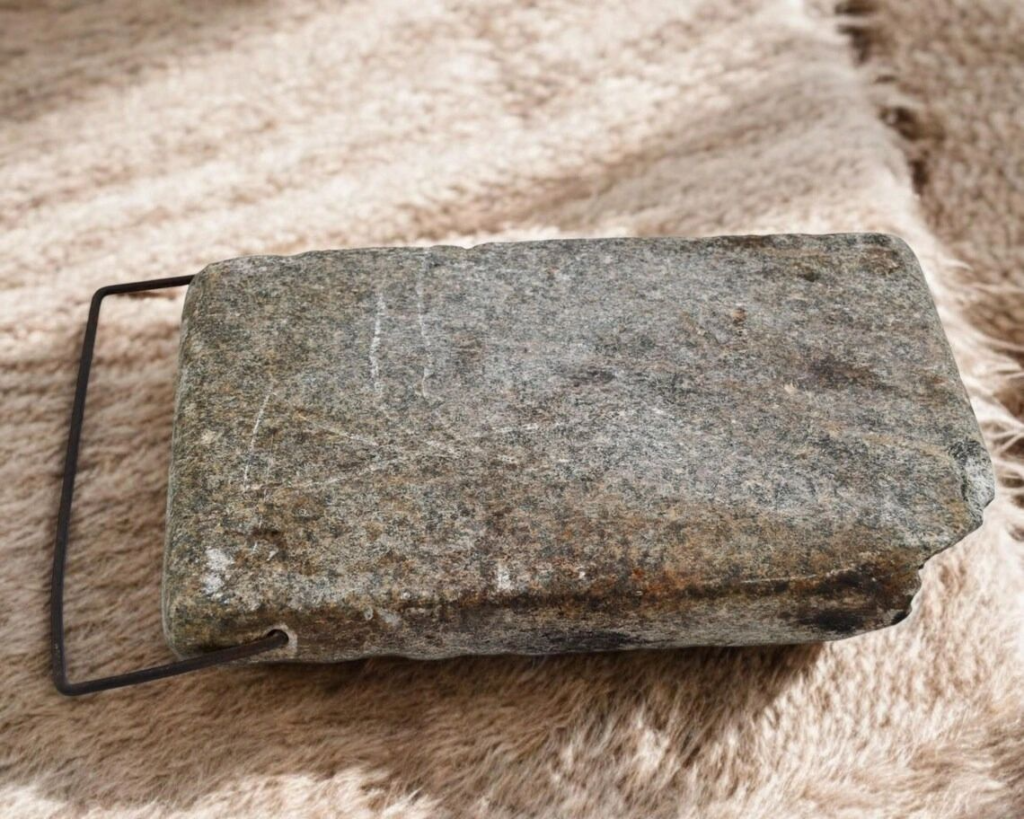
Used for Centuries, Loved in the 1800s
Soapstone warmers date back to time immemorial—but by the mid‑19th century, they became a cozy essential in cold‑climate daily life. Families would heat them by the hearth or wood stove, then wrap them in cloth and tuck them under the bedcovers—all night warmth without open flames.
Superior Heat Retention
Soapstone’s remarkable ability to store and slowly release heat made it ideal for bedtime comfort. Native Americans used it for cookware and hearthstones for the same reason—and people relied on it to avoid morning chills .
Portable Comfort in Carriages & Sleighs
Long before heated homes, riders in buggy, sleigh, or carriage winters tucked these warm stones by their feet to fend off frostbite on frigid journeys. It wasn’t just about comfort—it was survival and a delight in remote travel.
A Safer Alternative to Coal-Filled Pans
Older bed warmers used live embers, which carried fire risk and toxic fumes. Soapstone was a clean, soothing, flame-free substitute—warming beds smartly.
Why This One Matters
Your soapstone bed warmer isn’t just a decorative relic—it’s a tangible piece of domestic ingenuity, bridging ancient carving traditions and practical 19th-century living. Its worn surface and original iron handle whisper stories of midnight comfort in drafty homes, early settlers’ journeys, and an era when warmth came hand-heated and hearth-driven.
Display & Storytelling Tips
Home décor: Lean it against a vintage quilt or store it on a bedside stack of old books—bring a piece of homestead charm into modern spaces.
Educational display: Use in a winter vignette—complete with lantern, wool blanket, and even a tiny sleigh—to tell the story visually and emotionally.
Conversation starter: Ask, “Which old domestic treasure warms your heart—and imagination?”