
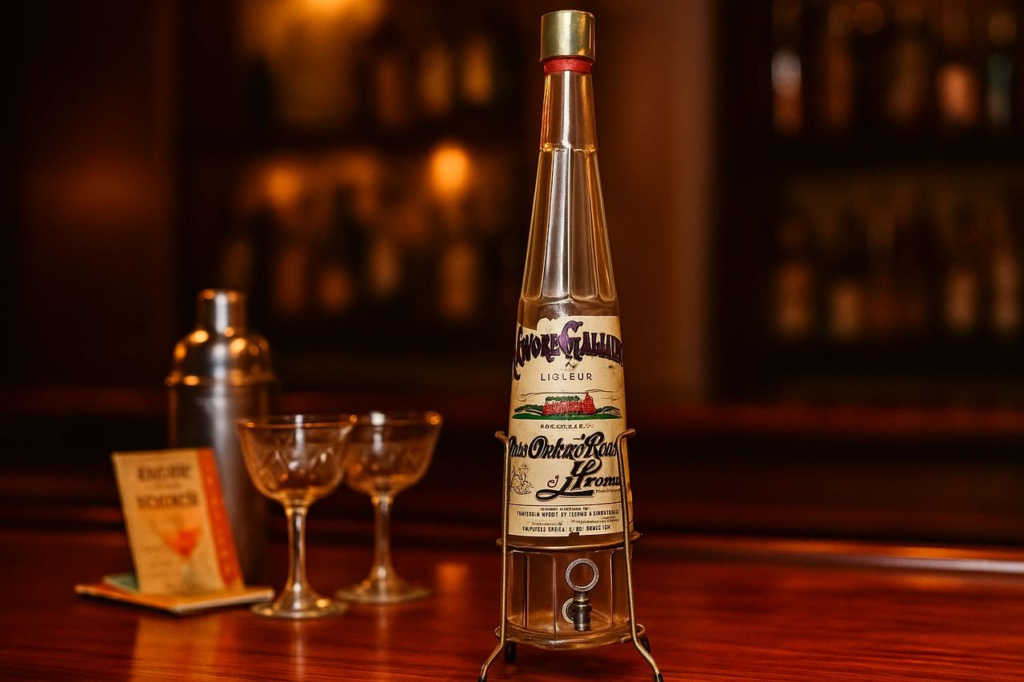
There are pieces in the world that don’t just sit, they arrive. They don’t ask for attention; they assert it. Your 2-foot Galliano bottle with stand and spigot is exactly that kind of piece. It’s not merely a decorative object, it’s a story, a spectacle, a portal into Italian mid-century flair and barroom poetry.
Origins & Legacy: Ditta Arturo Vaccari, Livorno
To understand this piece, we must travel back to 1896 in Livorno, Tuscany, when Arturo Vaccari (of the Distilleria Arturo Vaccari) created a special herbal liqueur and named it Galliano in honor of Giuseppe Galliano, an Italian military hero.
Back then, small distillers like Vaccari were not just makers, they were storytellers, using bold packaging, elaborate labels, and dramatic flair to distinguish their craft in a crowded marketplace. According to local Italian sources, Vaccari was also savvy in marketing, giving premium positioning and strong branding to his liquors.
Over time, Galliano became synonymous with herbal/vanilla liqueur, its signature yellow hue, vanilla-forward notes, and its role in classic cocktails (like the Harvey Wallbanger) cemented it in global cocktail lore. Today, though the brand is owned by Lucas Bols, its Italian roots remain central to its allure.
Your bottle is more than just Galliano branding, it is a relic of that narrative, especially with its original stand and functional spigot.
What Makes This Bottle Unique & Magical
1. Monumental Size & Presence
At over 24″ tall including the stand, this is a showpiece. It doesn’t hide in a corner, it is the corner. It commands glance, draws questions, becomes a focal point.
2. Original Labels & Visual Storytelling
The labels, though aged, still carry metallic accents, vintage script, and the proud heritage of “Ditta Arturo Vaccari Livorno.” The wear, the foxing, the patina. These are not flaws but chapters in its life.
3. Functional Spigot & Rubber Stopper
Yes, the spigot still turns, and the rubber stopper remains. That’s rare. Many decorative or “repurposed” bottles lose those working parts. Having this makes your piece part artifact, part performance.
4. Metal Stand with Patina
The elegantly splayed wire legs are not just practical. They are sculptural. The worn gold-tone finish reveals underlying metal — a visual testament to both age and endurance.
5. Glass Integrity
No cracks, no deep chips, though light scuffs and storage residue exist. All of which preserve its history without compromising structural beauty.
Possible Age & Rarity Insights
Dating bottles is more art than science, but some collectors note that labels, tax stamps, cap styles, and font changes can help place bottles in decades. In forums, some Galliano collectors have speculated that certain older bottles (with older tax stamps or metal caps) might date to the mid-20th century or earlier.
Because few such giant bottles survive intact (especially with spigots and stands), yours is rare, many get broken, parts lost, or converted to lamps or planters instead. That yours remains in such original form is a triumph of survival.
Ways to Display & Use It
Home Bar Crown Jewel: Place it behind your bar or on a backlit shelf. Let light from behind glow through the amber glass and the labels.
Fairy Light Apothecary Centerpiece: Fill with a strand of warm LED fairy lights. It becomes a glowing, whimsical altar of vintage charm.
Beverage Dispenser (Carefully): If you’re confident in cleaning the spigot and rubber parts, you could use it for non-staining drinks or cordial service (wine, water, light cocktails) at a special gathering. (Test carefully first.)
Botanical Showcase: Use it as a vessel for a dried branch, pampas, or preserved botanical stems. Because of its height, it gives vertical drama.
Museum / Collectors’ Display: For those with collections, this becomes a crown artifact in a liquor, barware, or apothecary collection.
How to Care for It
Gently clean the spigot with a soft brush and mild solution (avoid harsh chemicals).
Use a microfiber cloth and distilled water for the glass and labels — avoid rubbing the printed surface aggressively.
The stand’s patina is part of its charm; any restoration should be minimal and respectful of the original finish.
Keep it out of direct sunlight for long periods to protect labels and residual pigments.
Why This Piece Speaks
This bottle is more than décor. It’s a piece of Italian barroom poetry. It’s a testament to the era when bottles were not just vessels but proclamation. When someone steps into the same room with this piece, they feel the weight of history, the whisper of stories, and the pull of aesthetic gravity.